 By
By
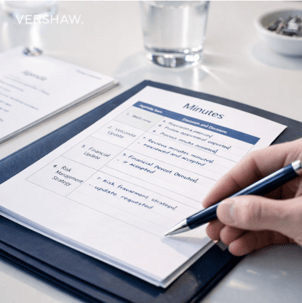 Minutes are often misunderstood.
They are not transcripts. They are not narratives. And they are certainly not administrative afterthoughts.
The Minutes for Boards and Committees module at the Governance Institute of Australia reinforced something I had learned over many years: minutes are legal records, governance tools, and risk controls — all at once.
Well-crafted minutes:
- evidence that directors have discharged their duties
- demonstrate due consideration and decision-making
- protect individuals and organisations in times of scrutiny
- and provide continuity beyond the room
Poor minutes, on the other hand, are dangerous. I have witnessed disputes escalate because minutes were vague, inconsistent, or failed to accurately reflect decisions and responsibilities. When governance is challenged, minutes are often the first document examined.
 Formal study sharpened my discipline around:
- clarity of resolutions
- recording decisions rather than debate
- capturing conflicts and declarations appropriately
- ensuring consistency and neutrality
- and understanding the legal weight minutes carry
Mentorship again was instrumental. Being guided by a General Counsel who treated minutes as defensible documents, not administrative summaries, fundamentally shaped my approach.
For Executive Assistants, minute-taking is one of the most powerful governance skills you can master. It requires judgment, confidence, discretion, and an understanding of board dynamics. These capabilities translate seamlessly into executive support, committee management, and business leadership.
In my own business, these principles inform how decisions are documented, how accountability is tracked, and how risk is managed. Governance doesn’t disappear when you step away from a formal board, it simply takes a different shape.
Strong minute practices underpin robust governance systems, and robust systems are what prevent misunderstanding, protect directors, and sustain trust.
- Alex